

What Makes a Good Office Chair? A Complete Component Guide
Most procurement decisions focus on chair category — ergonomic, task, executive. But the components behind the spec sheet determine whether a chair holds up for five years or starts generating complaints at month six. This guide covers what actually matters.
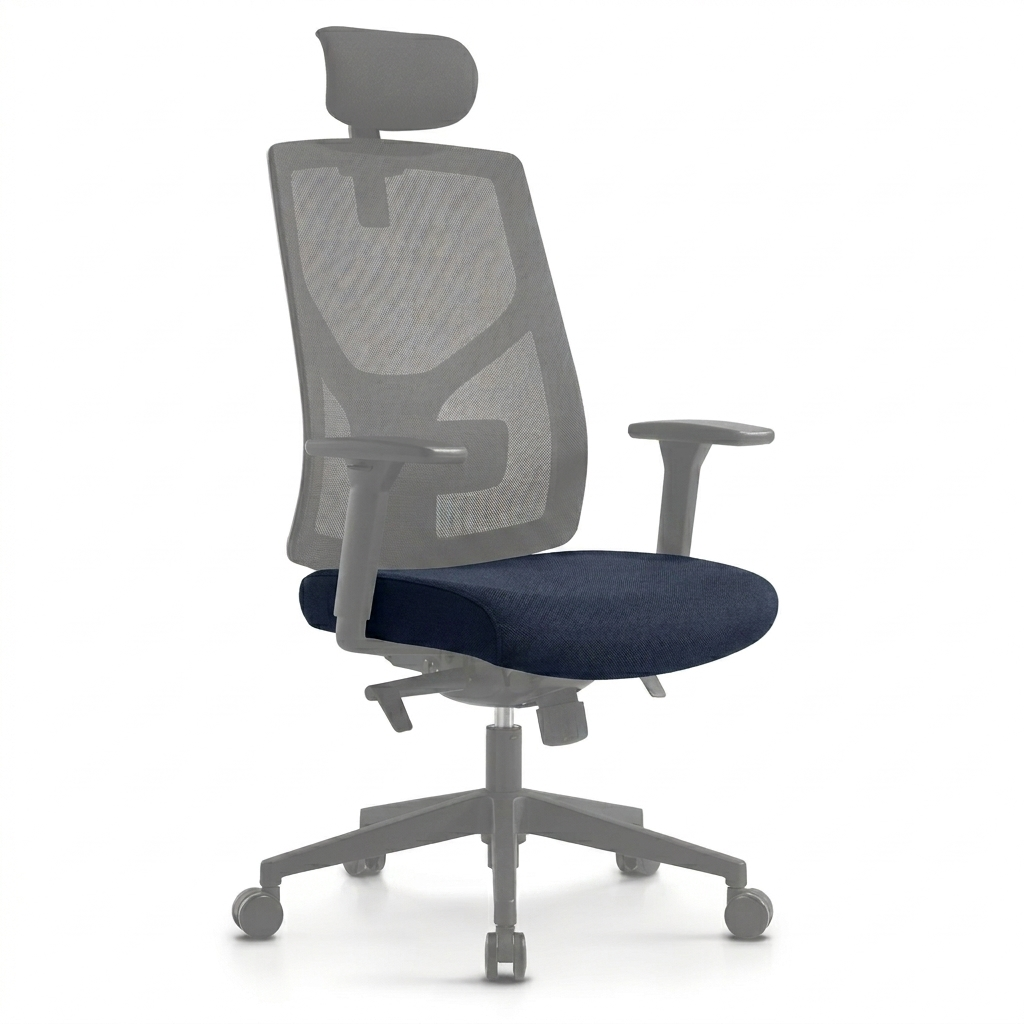
Upholstery: Mesh vs. Fabric vs. Artificial Leather
Mesh is the default for all-day office use — it breathes, doesn't retain heat, and holds its shape longer than foam-based surfaces. If you specify mesh, note that 3D mesh (spacer mesh) distributes pressure more evenly and resists sagging significantly better than standard flat-woven mesh; for chairs used 6+ hours daily, it's the more defensible spec.
Fabric costs less and customizes easily in color and texture, but absorbs sweat and is harder to clean in shared-desk environments.
Artificial leather wipes clean and reads as premium at a lower price point than genuine leather, but the surface cracks and peels within 2–3 years if base material quality is low — a warranty liability that's easy to underestimate at sample stage.
Recommendation: Specify mesh for task and ergonomic chairs used 6+ hours daily. Use artificial leather for executive or reception seating where appearance matters more than ventilation — and always request a delamination test report before confirming the order.
Armrest Pad Materials: PU vs. TPR vs. PP
PU foam pads feel soft at purchase but typically show surface cracking within two years of daily use — the failure mode is cosmetic first, then structural.
TPR (thermoplastic rubber) is more elastic, doesn't delaminate, and handles repeated contact significantly better; it's the material used in higher-grade products precisely because it generates fewer field complaints.
PP (polypropylene) is rigid and inexpensive — appropriate for task chairs where the armrest is positional only, not a comfort surface.
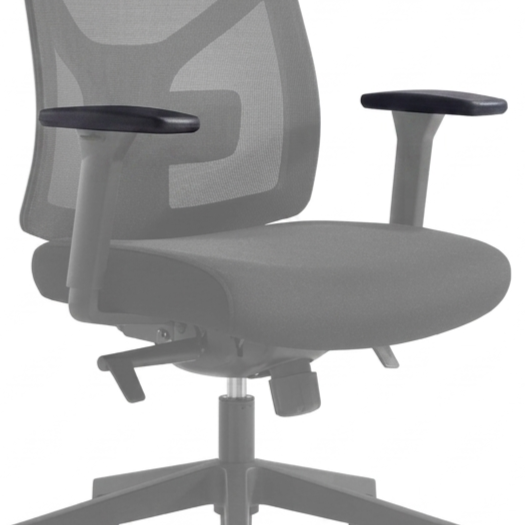
Recommendation: Specify TPR for any chair with a warranty of 2 years or more. PP is acceptable for low-cost task chairs. Avoid PU pads in humid climates or high-use environments.
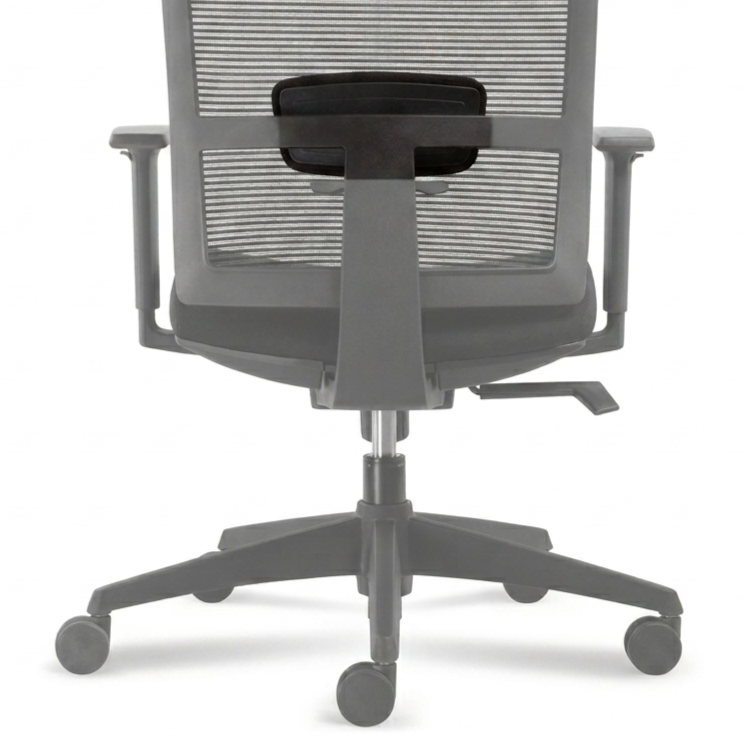
Lumbar Support: Fixed vs. Adjustable
Fixed lumbar supports work well when the chair is matched to a defined user population — a consistent workforce with similar height ranges. The failure point isn't the concept; it's the position. A fixed lumbar molded at the wrong height is worse than no lumbar at all.
Adjustable lumbar supports (height-sliding, depth-knob, or both) accommodate broader user ranges, making them better suited to hot-desking or diverse workforces. The practical risk with adjustable mechanisms is durability: cheap sliders lose their detent after repeated adjustment, rendering the feature useless within a year. When evaluating adjustable lumbar, test the mechanism under repeated cycling — not just at initial sample stage.
Recommendation: For shared or hot-desk environments, specify height-adjustable lumbar. For assigned seating with a known workforce, fixed lumbar at the correct position (L3–L5 vertebrae range) is sufficient and more reliable.
Gas Cylinder Class: What the Ratings Mean
Gas cylinders are graded from Class 1 to Class 4 — most market chairs ship with Class 1 or Class 2, making Class 3 the commercial minimum.
Class 3 cylinders deliver a 2.0mm inner rod and 1.5mm outer tube wall — the structural minimum that meets BIFMA and EN 1335 requirements for commercial office seating. Anything below this wall thickness is a residential-grade part being used outside its rated environment.
Class 4 cylinders use a 2.5mm nitrided inner rod — a surface-hardening process that increases wear resistance under sustained load. Heavy-duty Class 4 cylinders further extend the user weight rating to 130–150kg.
The certification matters beyond marketing: BIFMA-tested cylinders have documented burst-pressure ratings and cycle-count data that uncertified cylinders don't. A cylinder failure mid-use is both a safety and liability issue. Always request the test certificate, and clarify whether the rating covers the cylinder alone or includes the seat plate and mechanism assembly.
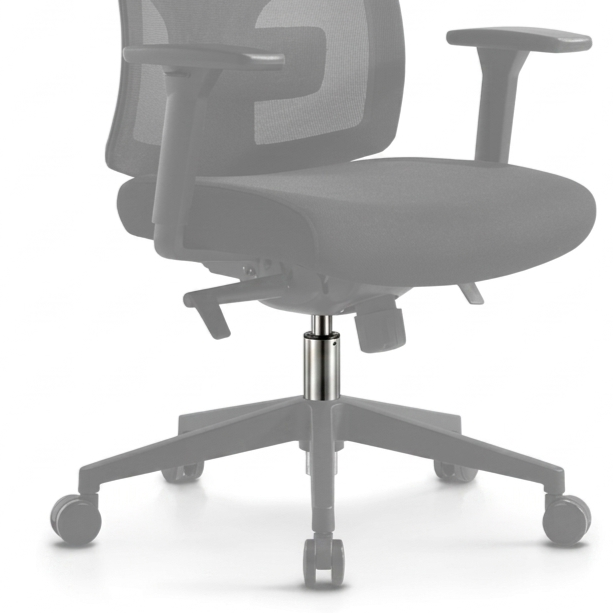
Recommendation: Specify Class 3 as the minimum for any commercial order. Use Class 4 for ergonomic or heavy-duty lines. Never accept a cylinder without a BIFMA or SGS test certificate.
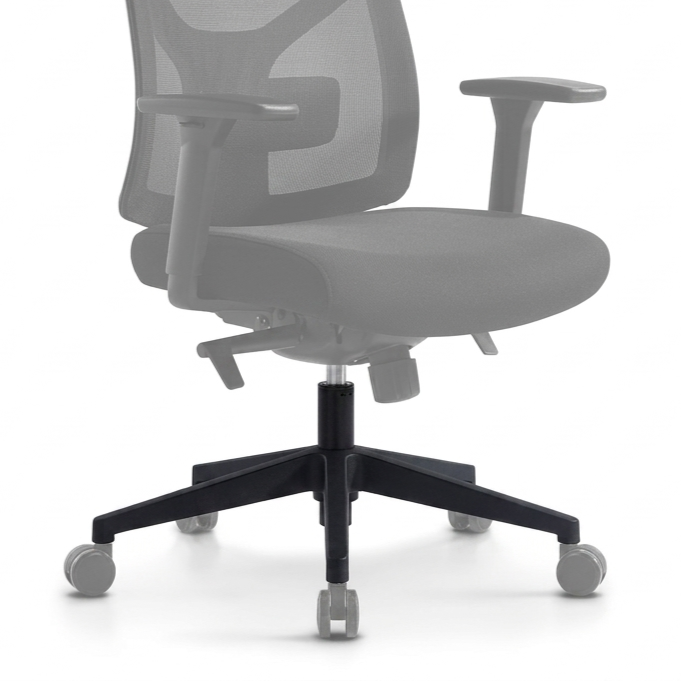
Chair Base: Aluminum vs. Nylon
Nylon bases (PA66) cover the majority of commercial office chairs and are structurally adequate when the glass-fiber content is properly specified — typically 30–40% GF. Below that threshold, nylon bases crack under sustained load, usually at the arm joints.
Aluminum die-cast bases offer higher load ratings, don't degrade under UV or humidity, and carry a finish that positions chairs in premium tiers. The tradeoff is weight and cost: aluminum bases add 1.5–2kg per chair, which affects both shipping cost and user mobility. For most mid-range commercial applications, 35% GF nylon is sufficient. Aluminum makes sense when the product is positioned above $300 retail or needs to carry a load rating above 120kg.
Recommendation: Always specify glass-fiber percentage in nylon base orders — "nylon base" alone is not a sufficient spec. Use aluminum for premium lines or heavy-duty ratings.
Office Chair Casters: Types & Floor Compatibility
Hard nylon casters are standard and perform well on carpet, but scratch hardwood and tile — a common source of complaints in modern offices with hard flooring.
Soft PU casters roll quietly on hard surfaces without causing damage and are now the better default for mixed or unknown flooring environments.
Brake casters auto-lock when the user stands, preventing chair drift on slopes or smooth floors.
One sourcing detail often missed: confirm stem compatibility between caster and base before ordering, as grip-ring and threaded stems are not interchangeable.
For a full breakdown of caster types, materials, and floor compatibility, see our complete caster guide →
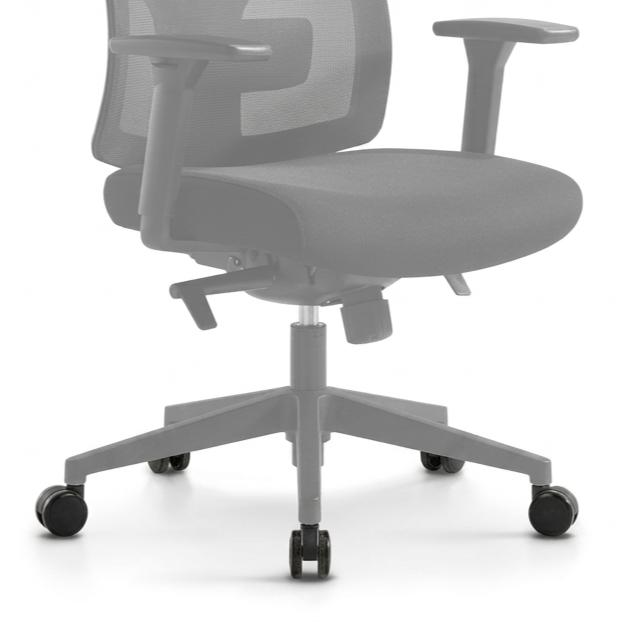
Recommendation: Default to soft PU casters for hard flooring. Confirm stem type (grip-ring vs. threaded) against your base spec before ordering. For standing-desk environments, specify brake casters.
Sourcing Office Chairs With the Full Picture
Each component above functions as an independent specification decision — but in a finished chair, they interact. A premium aluminum base paired with low-grade casters creates floor damage complaints. An ergonomic lumbar system undermined by a Class 2 cylinder creates a safety liability. The strongest procurement decisions treat the chair as a system, verifying that each part is rated and tested for the same use environment and product lifecycle.
Tecview Group sources and supplies each of these components individually for brand clients and OEM buyers, as well as helping procurement teams specify and procure complete chair assemblies that match their quality and budget requirements. Use the component guides above to build your specification — or contact us to review your current BOM.
