

Office Chair Casters: Everything You Need to Know Before You Buy
Office chair wheels are the most overlooked component at the specification stage — and one of the most common sources of complaints after deployment. Whether you're procuring 200 chairs or looking for an office chair wheel replacement for a single seat, this guide covers everything you need to choose the right hardware for your environment.
Know What You're Buying Before You Compare
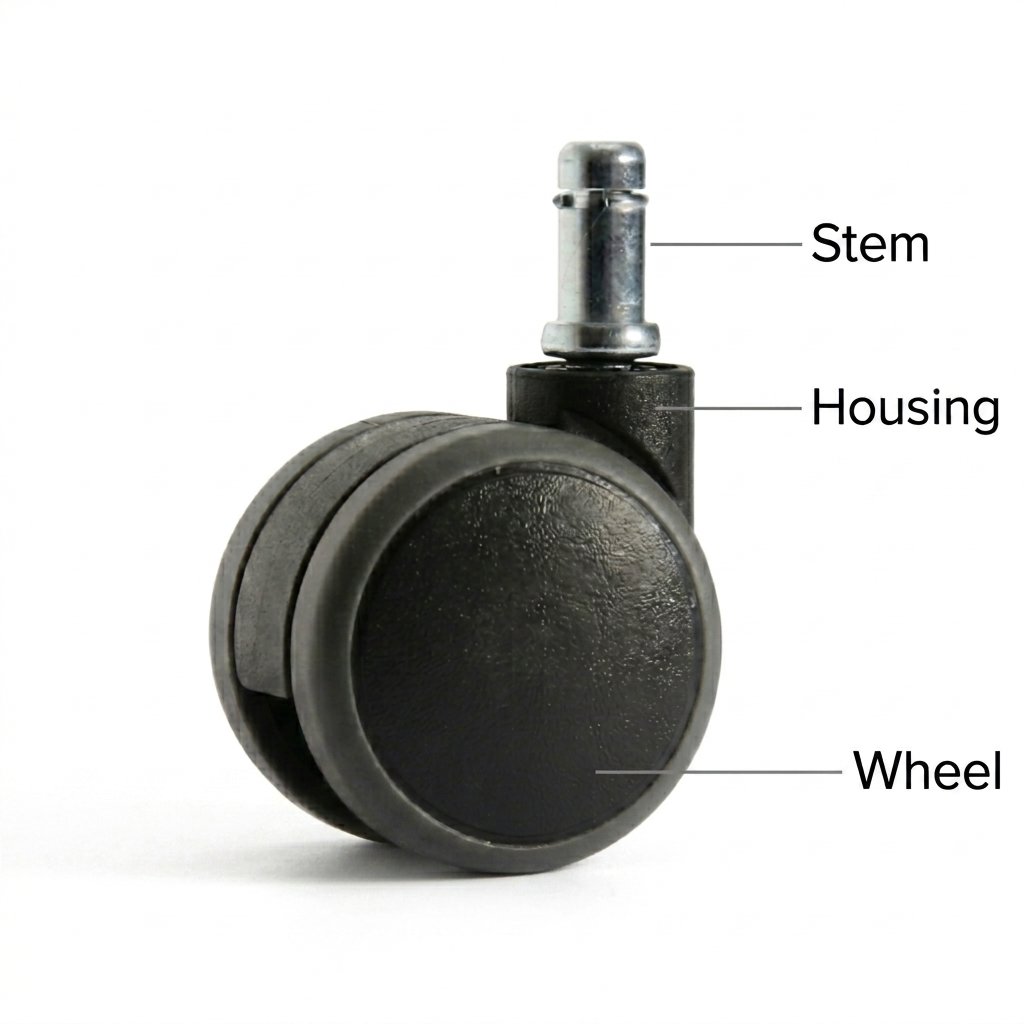
Before comparing types, it helps to understand what a caster actually consists of. Every office chair caster has three components: the wheel (the rolling surface), the housing (the fork that holds the wheel and allows it to swivel), and the stem (the post that inserts into the chair base). Material and function choices happen at each of these levels — which is why "caster type" means different things depending on which layer you're specifying.
Find the Right Caster for Your Environment
Office chair casters differ across two primary dimensions. Most buyers focus on one and overlook the other.
Choose Your Material: What Your Floor Actually Needs
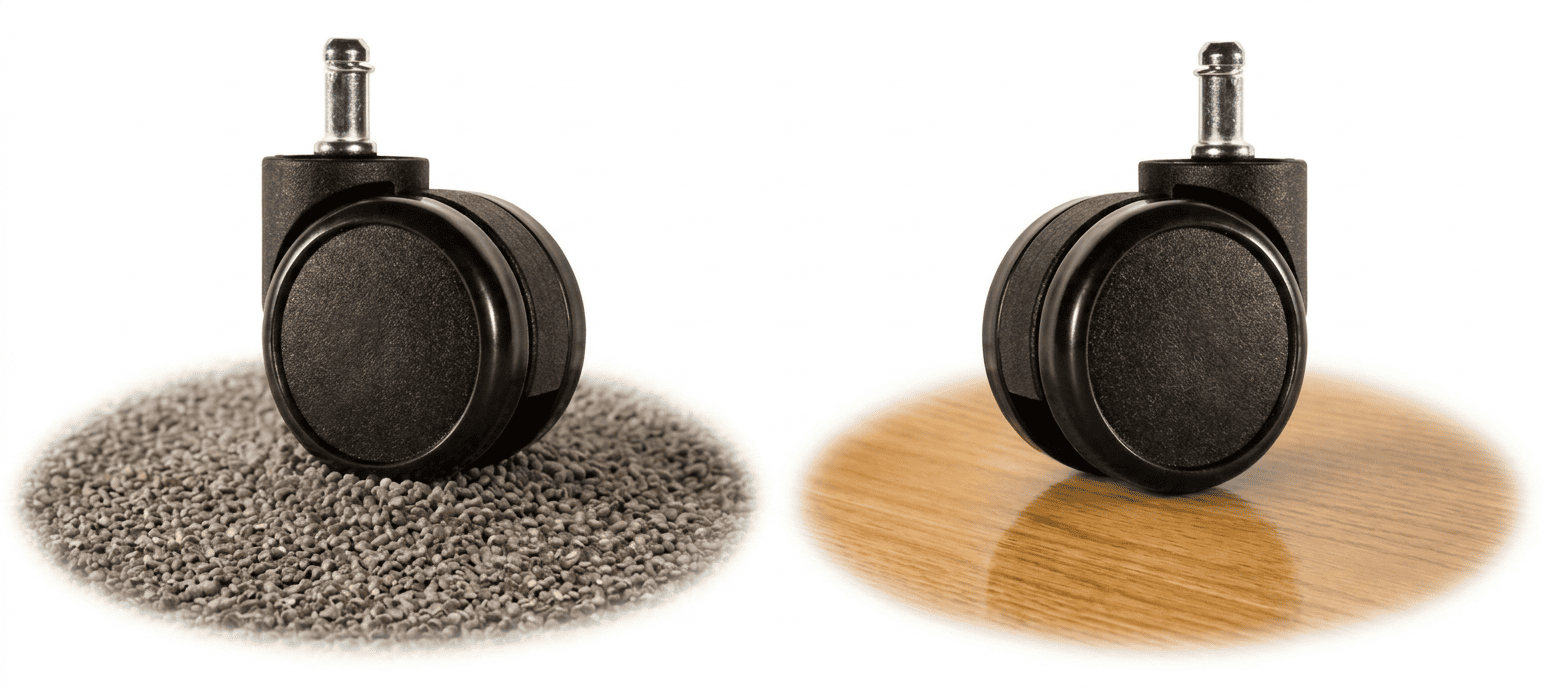
- Hard nylon is the standard in most office chairs. It performs well on carpet — rolls smoothly and holds up under daily use. The problem is hard surfaces: nylon casters scratch and scuff hardwood, tile, and laminate flooring, which is why they generate so many complaints in modern offices that have moved away from carpet.
- Soft PU (Polyurethane) casters are the better default for hard flooring. The softer wheel material absorbs impact, rolls quietly, and doesn't leave marks on wood or tile. For mixed or unknown flooring environments — a common situation when procuring for multiple locations — soft PU is the safer specification.
- Rubber casters are less common in standard office settings. They're primarily used in environments requiring anti-static properties (server rooms, labs) or unusually high grip on specific surfaces.
Choose Your Function: Get More From Your Casters
- Standard casters roll freely in any direction and are appropriate for the majority of office environments.
- Brake casters auto-lock when the user stands up, preventing the chair from drifting. These are particularly useful in standing-desk setups, on smooth floors, or in any environment where an unsecured chair creates a safety concern.
- Locking casters use a manual mechanism to fix the chair in place — relevant for reception areas or environments where chair position needs to remain fixed.
Stop Guessing! Match Your Caster to Your Floor
The single most important variable in caster selection is floor type. The table below covers the most common scenarios:
| Floor Type \ Wheel Material | Hard Nylon Wheels | Soft PU Wheels | Rubber Wheels |
| Carpet | ✓ Recommended | Acceptable | Not ideal |
| Hardwood | Scratches surface | ✓ Recommended | Acceptable |
| Tile / Laminate | Scratches surface | ✓ Recommended | Acceptable |
| Anti-static Required | Not suitable | Not suitable | ✓ Recommended |
Sourcing Note: For mixed flooring environments, soft PU wheels are the lower-risk default to avoid costly floor damage claims.
Ready to protect your floors? Explore our full range of high-quality office chair casters and find the perfect match for your workspace.
The Stem Mistake That Makes New Casters Useless
Stems come in two types: grip-ring (a snap-fit post, standard on most European chair bases) and threaded (a screw-in post, used on some Asian-manufactured bases). The two are not interchangeable — ordering the wrong stem type means the caster simply won't fit, regardless of wheel quality.
This error is most common when casters and bases are sourced separately. Before placing a caster order, confirm the stem type on your existing base. If you're unsure, measure the stem socket diameter: grip-ring stems are typically 7/8 inch (22mm), while threaded stems vary by manufacturer and should be confirmed against the base spec sheet.
Avoid Overloading Your Wheels — Here's How to Calculate
Each caster carries a fraction of the total load. The calculation is straightforward: (chair weight + maximum user weight) ÷ 5. For a chair weighing 15kg used by someone up to 100kg, each caster needs to handle at least 23kg. Underspecified casters deform under sustained load, leading to uneven rolling, increased floor contact pressure, and shorter product life. Always check the per-wheel load rating in the supplier's spec sheet — not just the total chair weight rating.
How to Clean and Maintain Office Chair Wheels
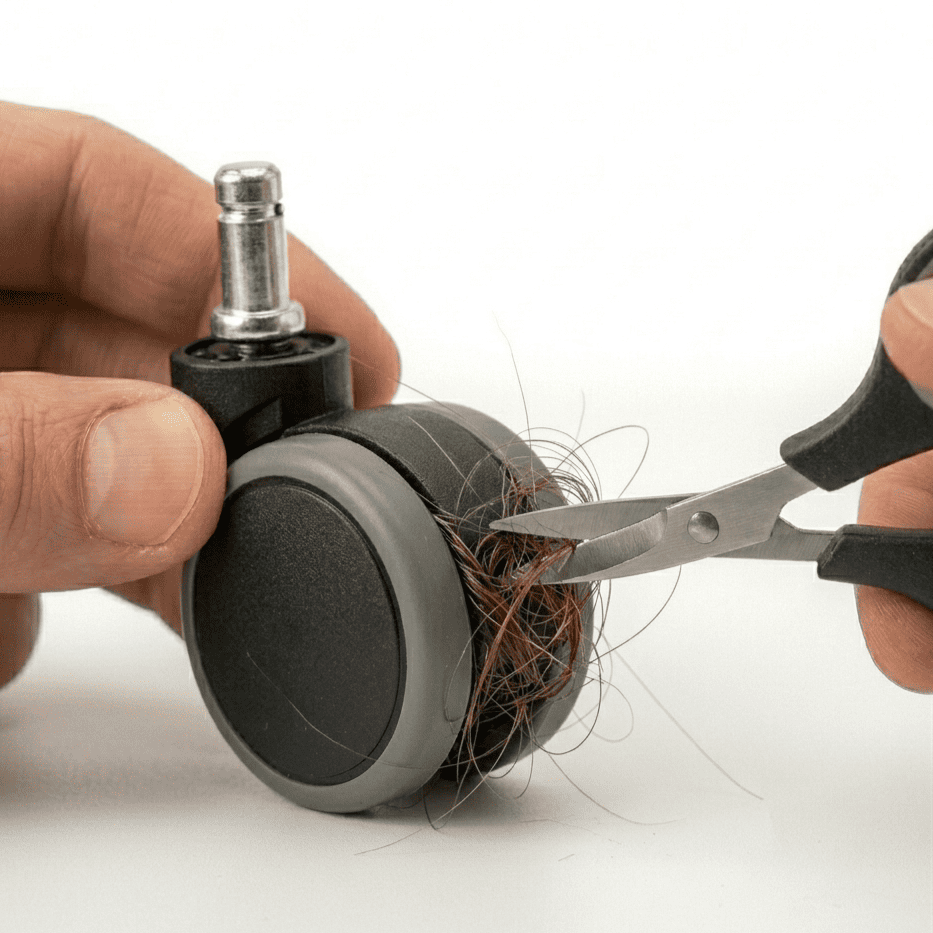
Hair and debris wrapped around the axle is the most common cause of wheels becoming stiff or stuck.
How to Remove Hair from Office Chair Wheels — Before It Slows You Down
- Flip the chair or tip it sideways to access the axle
- Use scissors or a seam ripper to cut through wrapped hair and debris
- Pull the loosened material free by hand
- Wipe the axle area with a dry cloth to remove residual dust
Avoid liquid cleaners on the axle housing — moisture accelerates corrosion in metal components.
How to Clean Office Chair Wheels and Replace Them the Right Way
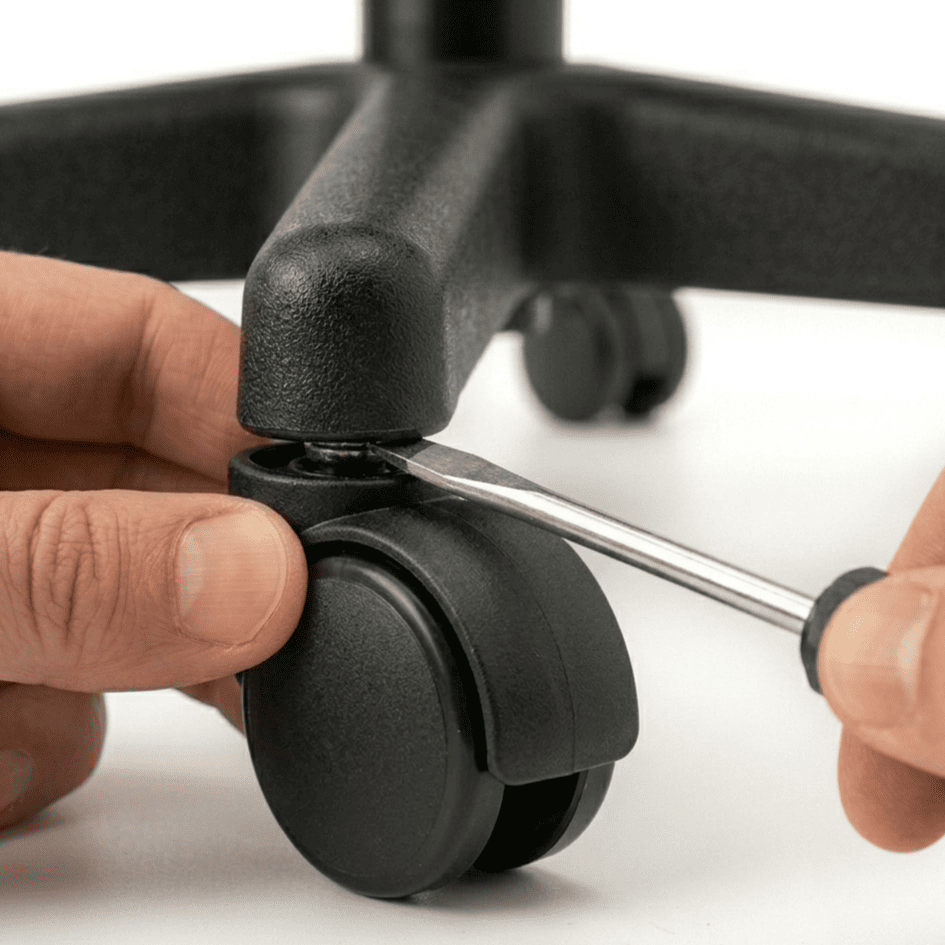
- Pull the caster straight out of the base stem socket — no tools needed
- If stuck, insert a flat-head screwdriver at the base of the stem for leverage
- Wipe the wheel surface and housing with a dry cloth before reinserting or replacing
- When ordering replacements, confirm stem type and wheel diameter before purchasing
FAQ
1. Are office chair casters universal?
No. While many casters share the same stem type (grip-ring, 7/8 inch), stem types are not standardized across all manufacturers. Wheel diameter and housing width also vary. Before purchasing replacement casters, confirm the stem type and socket dimensions on your existing chair base.
2. Are office chair casters a standard size?
Stem size is not universally standardized. Grip-ring stems (7/8 inch / 22mm) are the most common in commercial office chairs, but threaded stems are used on some bases — particularly in Asian-manufactured products. Wheel diameter typically ranges from 40mm to 75mm depending on chair category and load rating.
3. Why did my office chair wheel break?
The most common causes are insufficient load capacity, material mismatch for the floor type, and debris buildup causing uneven stress on the axle. Hard nylon casters used on hard flooring also tend to crack faster than soft PU equivalents under the same load conditions. If wheels are breaking repeatedly, review the per-wheel load rating against actual use conditions before replacing with the same spec.
4. Do I need a chair mat if I have hardwood floors?
It depends on your caster type. If you use standard hard nylon casters, a chair mat is essential to prevent permanent floor damage. However, if you upgrade to soft PU office chair wheels for hardwood floors, you can typically skip the mat. These specialized chair wheels for hardwood floors are designed to distribute weight safely without scratching or scuffing the wood surface.
