

Why Is Your Office Chair Squeaking? A Guide to Identifying Component Failures
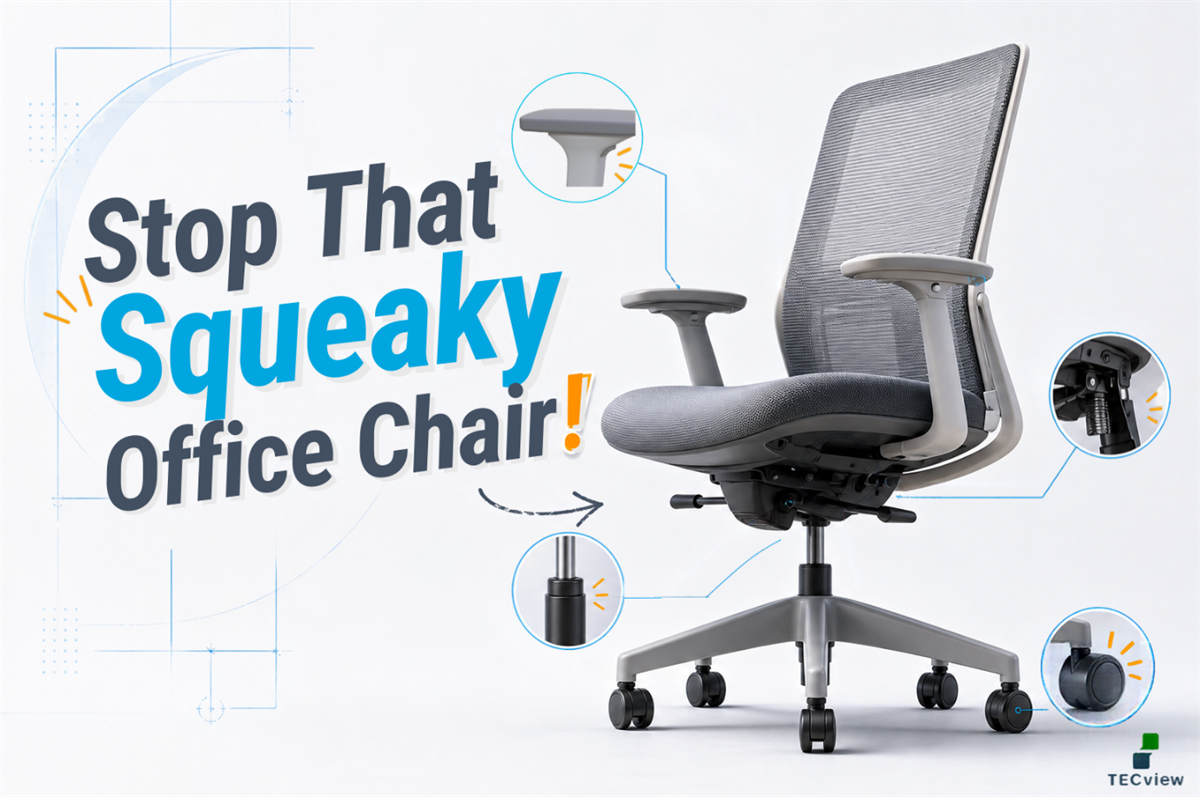
Understanding the Anatomy of Office Chair Noise
Few things are as distracting in a professional environment as the persistent sound of an office chair squeaking noise. While often dismissed as a minor annoyance, these sounds are usually the first indicators of mechanical fatigue or structural compromise. Understanding the anatomy of your chair is the first step toward effective ergonomic chair maintenance.
Ergonomic chairs are complex assemblies composed of interconnected moving parts. Over time, friction, dust accumulation, and material stress lead to the degradation of these components. Identifying the specific source of the noise is critical, not only for restoring silence and comfort but also for ensuring user safety. High-quality office chair spare parts are essential in preventing premature wear and tear, as inferior materials often succumb to stress long before their intended lifecycle ends.

Key Culprits: When the Mechanism and Gas Lift Fail
The two most common points of failure in any ergonomic chair are the seat mechanism and the gas lift cylinder.
The Seat Mechanism
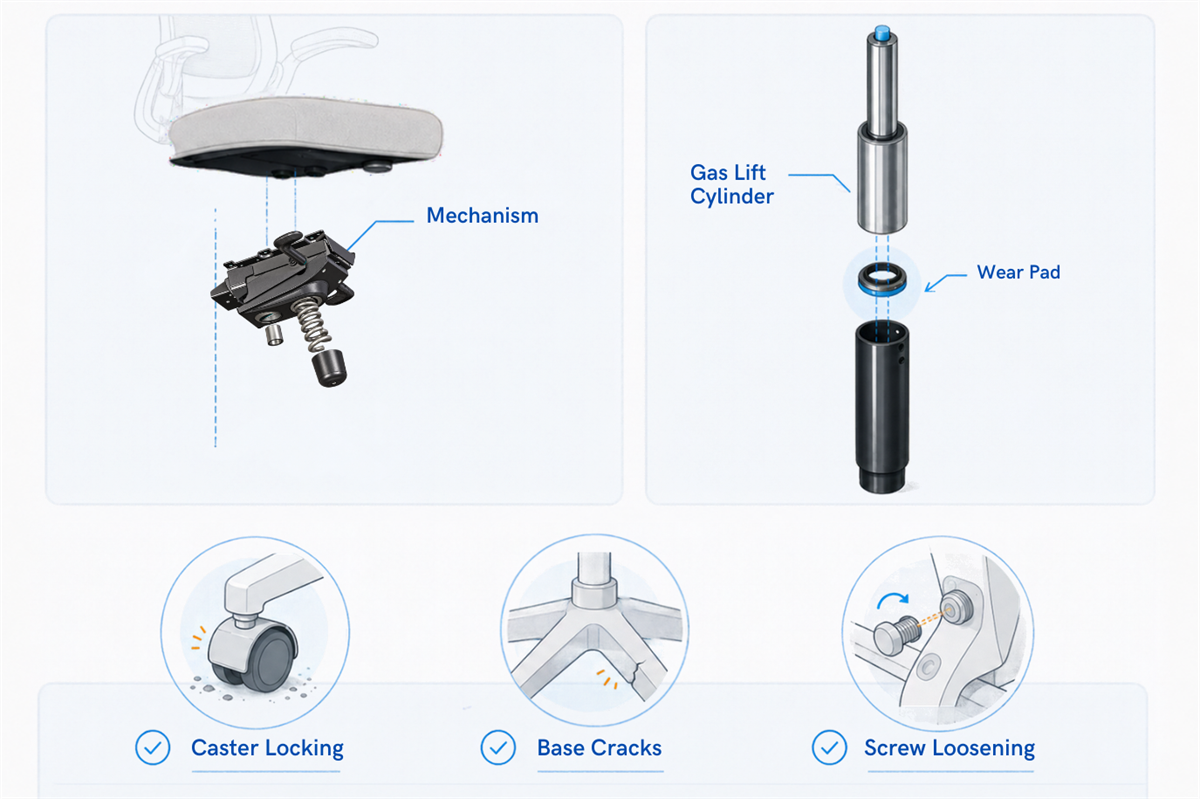
The seat mechanism is the "heart" of the chair, controlling tilt, tension, and height adjustments. Internal spring fatigue or a lack of lubrication in the tension control assembly often leads to clicking and grinding sounds. If you notice the chair feels unstable or "wobbly" during movement, it is a clear sign that you require office chair mechanism repair.
Gas Lift Cylinder
A chair gas lift failure is often characterized by a sinking sensation or a persistent creaking sound when shifting weight. This occurs when the pneumatic seals within the cylinder degrade, causing a loss of pressure. Once the integrity of the gas lift is compromised, the internal metal components can rub against the outer casing, creating audible friction. To mitigate these issues, manufacturers must prioritize precision-engineered components that are built to withstand heavy daily use.
Secondary Sources: Base, Casters, and Fasteners
While the mechanism and cylinder are primary suspects, secondary components often contribute to a noisy and unstable seating experience.
- Casters and Bearings: Caster wheels are prone to collecting debris, such as carpet fibers and dust, which can clog the bearings. When the wheels stop rotating smoothly, they drag across the floor, causing vibration and noise.
- Chair Base: The base provides the structural foundation for the entire chair. Hairline cracks—often invisible to the naked eye—can develop in plastic or metal bases due to constant stress, leading to structural instability and squeaks.
- Fasteners and Bolts: Regular use can cause bolts to loosen over time. A chair that is not properly tightened will shift slightly during movement, causing metal-on-metal or metal-on-plastic contact that results in persistent noise.
Maintenance and Replacement Strategies for Manufacturers
For manufacturers and facility managers, proactive maintenance is the key to extending the product lifecycle. Implementing a routine inspection schedule for bolts, casters, and mechanisms can prevent minor issues from turning into costly failures.
When a component fails, the decision between repair and full replacement often comes down to the design of the chair. Modern ergonomic furniture increasingly utilizes modular designs, which allow for the replacement of individual parts—such as a specific armrest or a gas lift—rather than discarding the entire unit. This approach not only supports sustainability goals but also significantly reduces long-term operational costs.
Why Quality Components Matter for Long-Term Reliability
At TECview Group, we understand that a chair is only as good as its weakest component. Since 1989, we have specialized in providing high-performance OEM office chair components that meet rigorous quality control standards. By focusing on global supply chain integration and professional R&D, we ensure that every gear, base, and mechanism we supply prevents the common pitfalls of component failure.
Whether you are an international furniture brand, an OEM manufacturer, or a distributor, partnering with an experienced supplier is vital. Our commitment to "Total Solution" services—ranging from quality inspection to reliable logistics—ensures that your products remain silent, stable, and comfortable for the end user.
Ensure Your Furniture Meets Global Standards
Don't let component failure compromise your brand reputation. If you are looking for reliable, high-quality furniture component troubleshooting and a stable supply chain, TECview Group is your trusted partner.
Contact us today to learn more about our comprehensive range of office chair spare parts and how we can support your manufacturing needs.
